Cairo Egypt Tours · Travel planning
How to choose your Nile cruise
A practical booking sequence: establish the route and dates, then compare the actual vessel, cabin, visits and service boundaries.
Begin with the route, not a star label
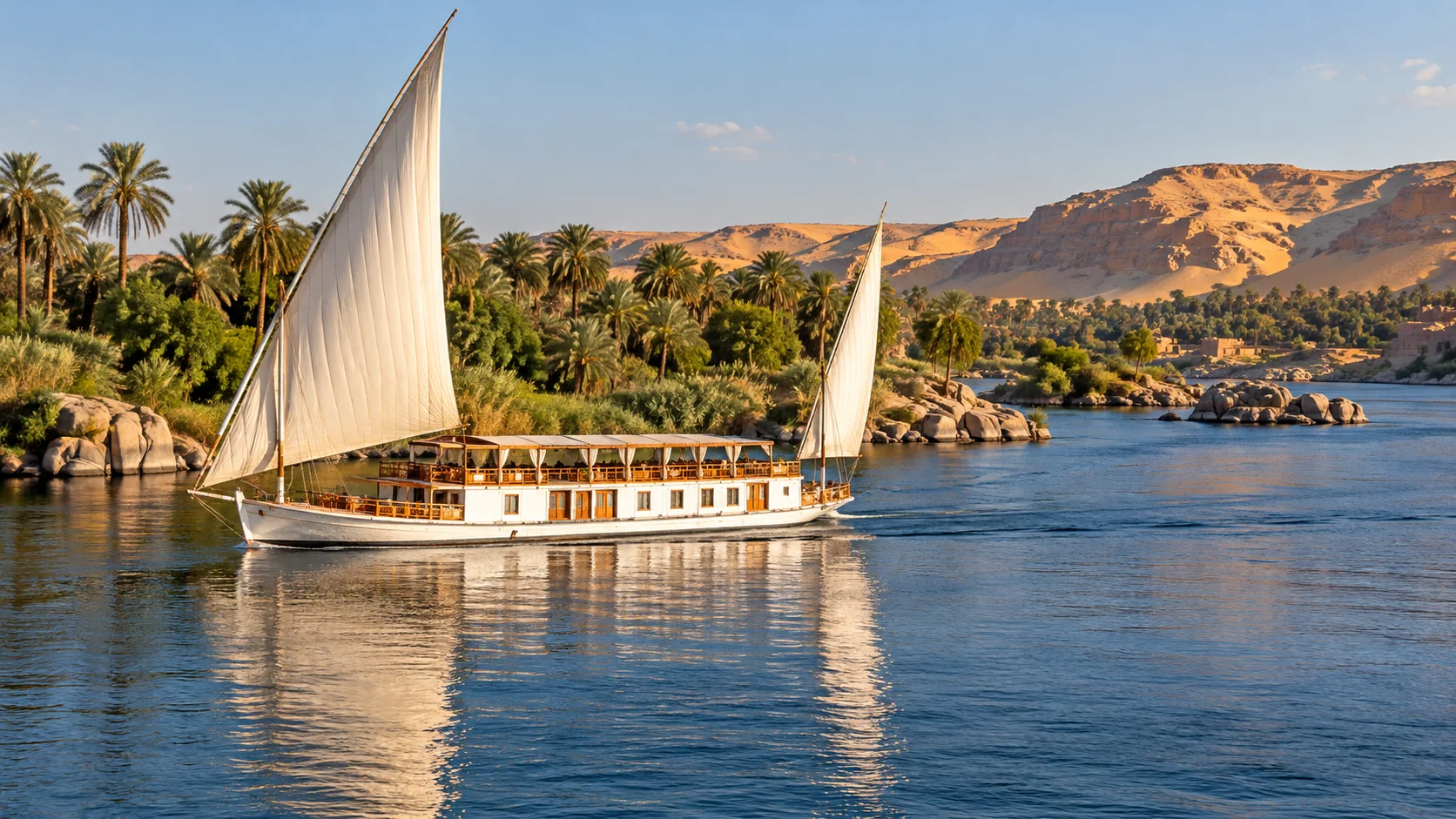
First decide which journey you mean. A conventional cruise between Luxor and Aswan, a smaller dahabiya programme and a Lake Nasser sailing are not interchangeable versions of the same route. List the monuments you hope to visit and ask which are actually in the programme. Lake Nasser has its own geographical focus, while Abu Simbel is not an automatic inclusion on a Luxor–Aswan cruise. Once the route is right, compare the proposed boats. A category label cannot answer questions about the cabin, atmosphere or sightseeing arrangements.
Check availability before fixing the connections
Ask for the named sailing, embarkation location, finishing point and number of nights. Do not assume a boat departs daily or that travelling in the other direction leaves every visit unchanged. Your arrival day may include sightseeing, simply boarding, or a transfer to another embarkation point. Establish those details before purchasing closely connected flights. An overnight ashore can make the journey more comfortable when arrival timing is awkward. The comparison should include the full transition from hotel or airport to boat, not just the hours shown for embarkation.
Identify the cabin the quotation describes
Photographs can mix standard cabins, suites and public areas without making the differences obvious. Request the category you would actually book, with bed configuration and any deck or location request. Ask which preferences are confirmed and which remain subject to allocation. A river-facing window does not ensure an uninterrupted view at every mooring, where boats may lie alongside one another. If cabin space, steps or bathroom layout affect your comfort, ask for details specific to that category rather than relying on a general description of the vessel.
Separate meals from the rest of the onboard bill
A meal plan needs more detail than a broad promise of everything included. Confirm the meals covered on embarkation and disembarkation days, drinks arrangements and any separate services you expect to use. If you have dietary preferences, ask what can be accommodated on the actual sailing and when the information must be supplied. Compare proposals with the same scope before judging value. An attractive cabin quote and a package including transfers, guiding and admissions are different purchases, even when both use the same vessel and dates.
Find out who accompanies you ashore
Some arrangements use shared excursions, while others provide a private guide for specified visits. Confirm the guiding language, group arrangement, admissions and local transport. Ask whether the same guide accompanies the full programme or separate guides meet you in different places; neither arrangement should be inferred from the word private. Optional excursions also need a place in the timetable. A private visit must still respect the vessel’s departure, so skipping a shared excursion does not create unlimited freedom to organise a different day without coordination.
Read the programme as a balance of activities
Cruising is a mixture of sailing, mooring, meals and visits, not uninterrupted movement through scenery. Look at when you can use the deck and when the programme takes you ashore. Ask which elements could change because of operating conditions and how you would be informed. Finally, check transfer responsibilities, local contact details and the terms for a vessel substitution or altered sailing. The best choice is the boat and programme that fit your dates and habits, supported by a clear written offer rather than an assumed idea of luxury.